the weight of what we wear
Maison Margiela’s Fall/Winter 2026 collection under Glenn Martens feels significant because it does not simply repeat Margiela’s established vocabulary. It asks why that vocabulary still matters. Martens, a Belgian designer from Bruges who studied at Antwerp’s Royal Academy of Fine Arts, approaches the house with an understanding of fashion that feels deeply rooted in construction, material and transformation.
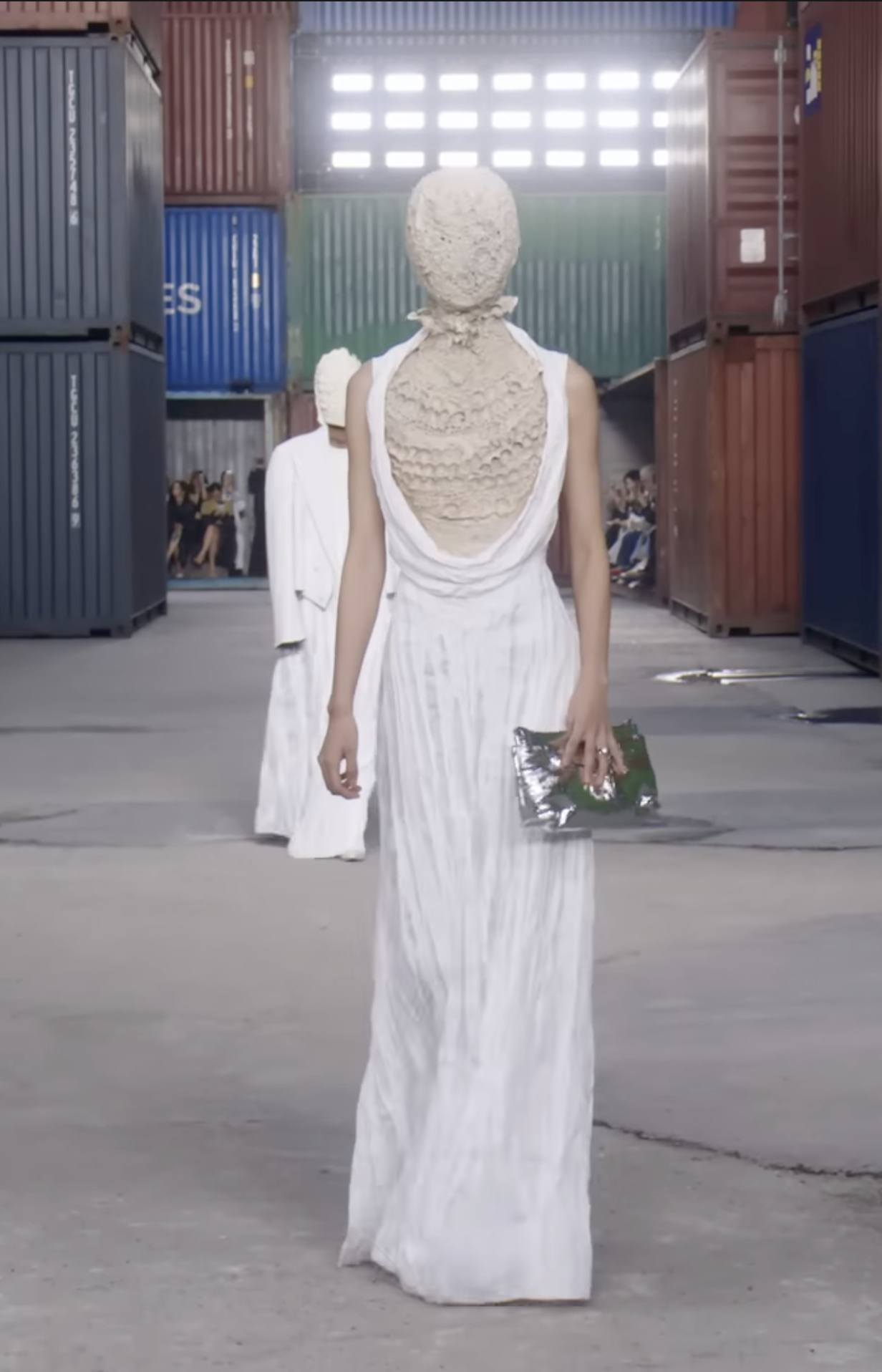
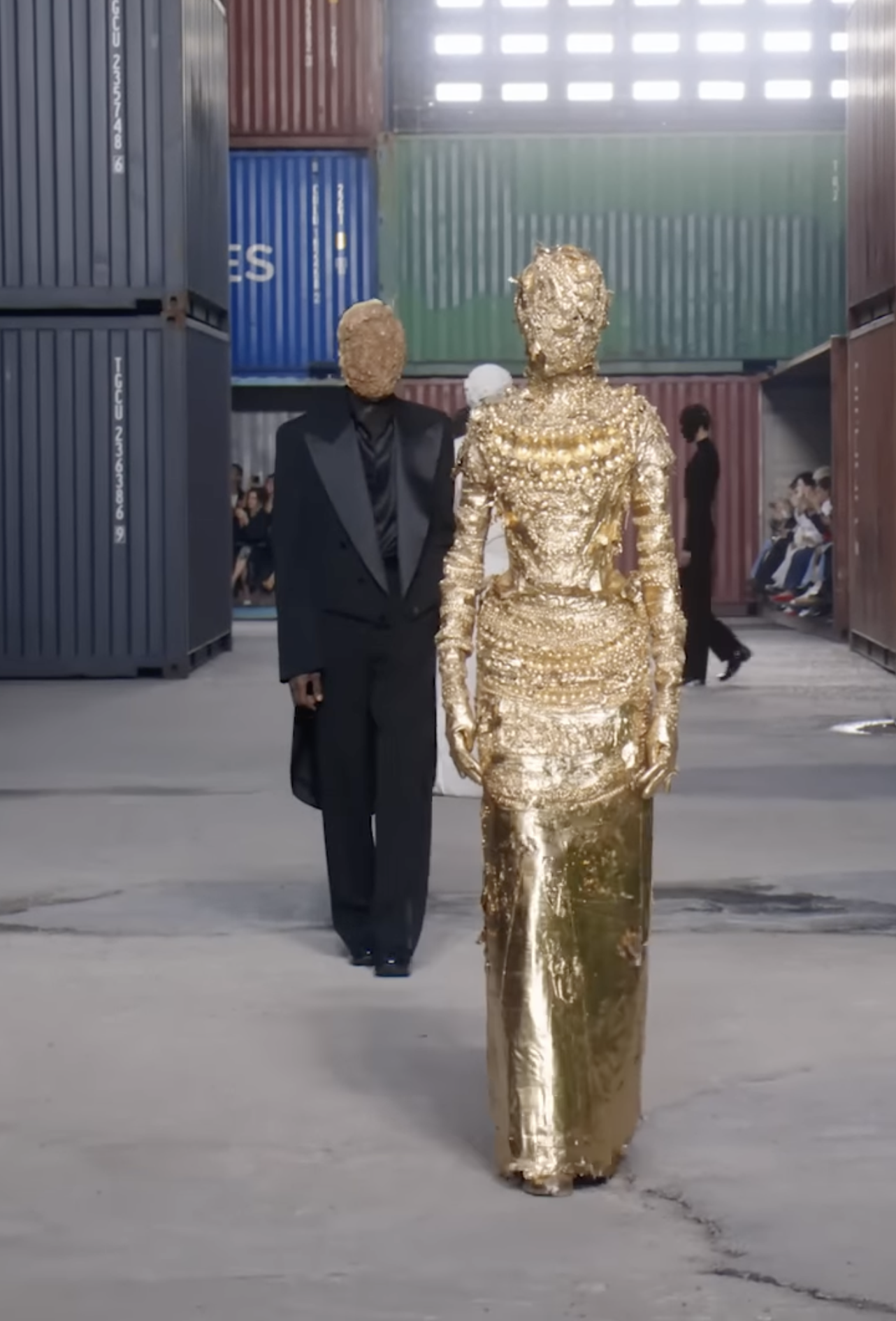
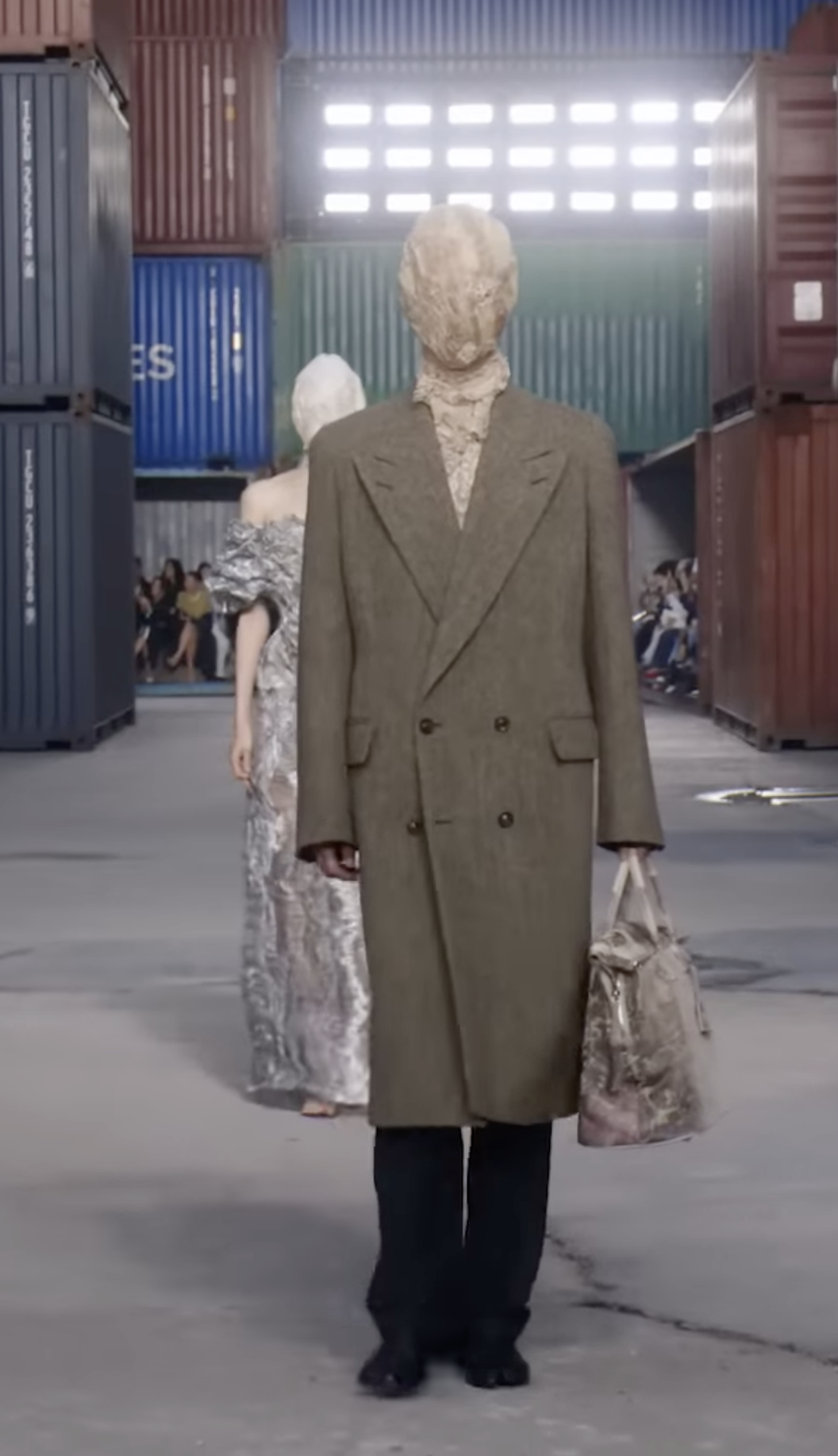
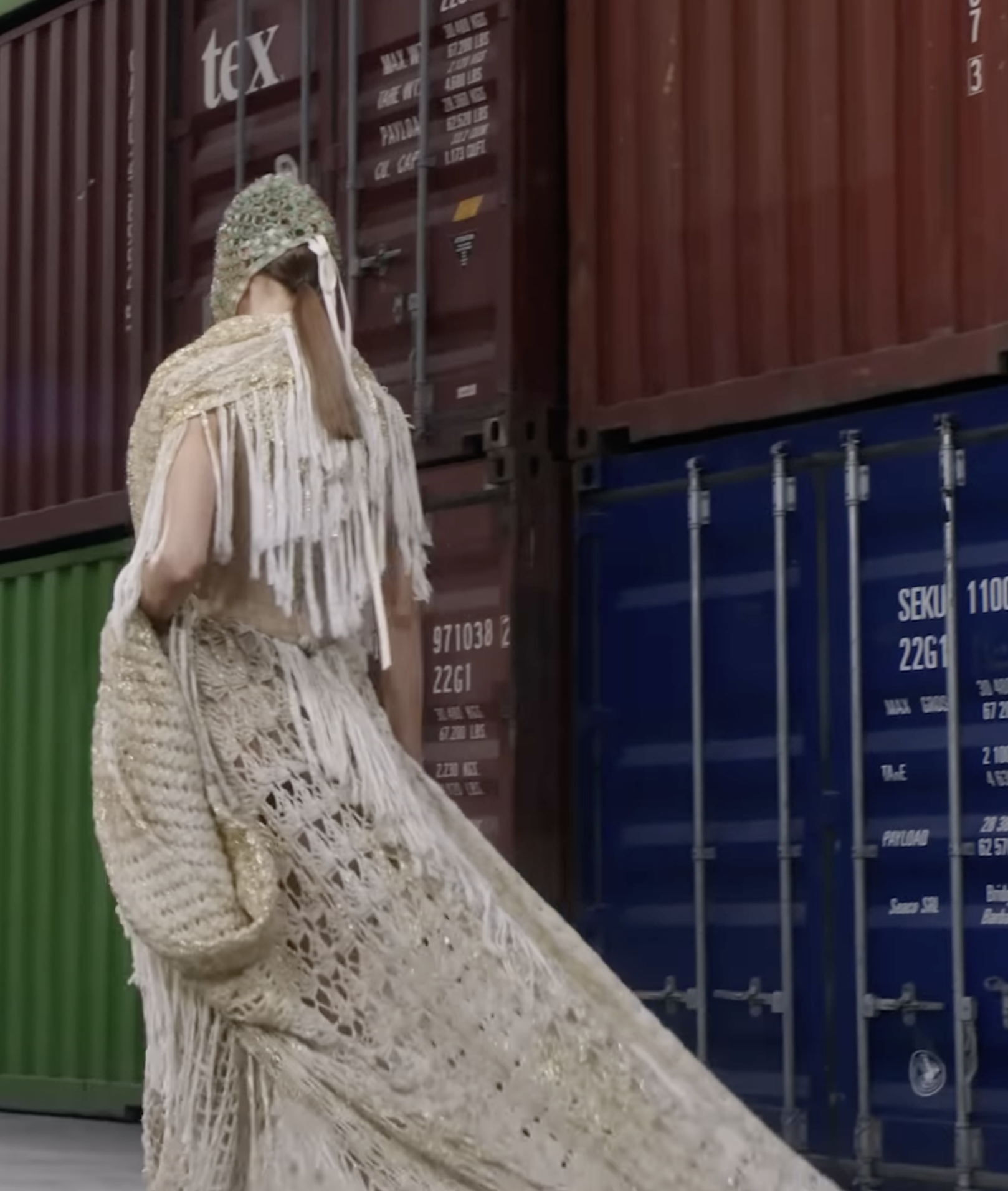
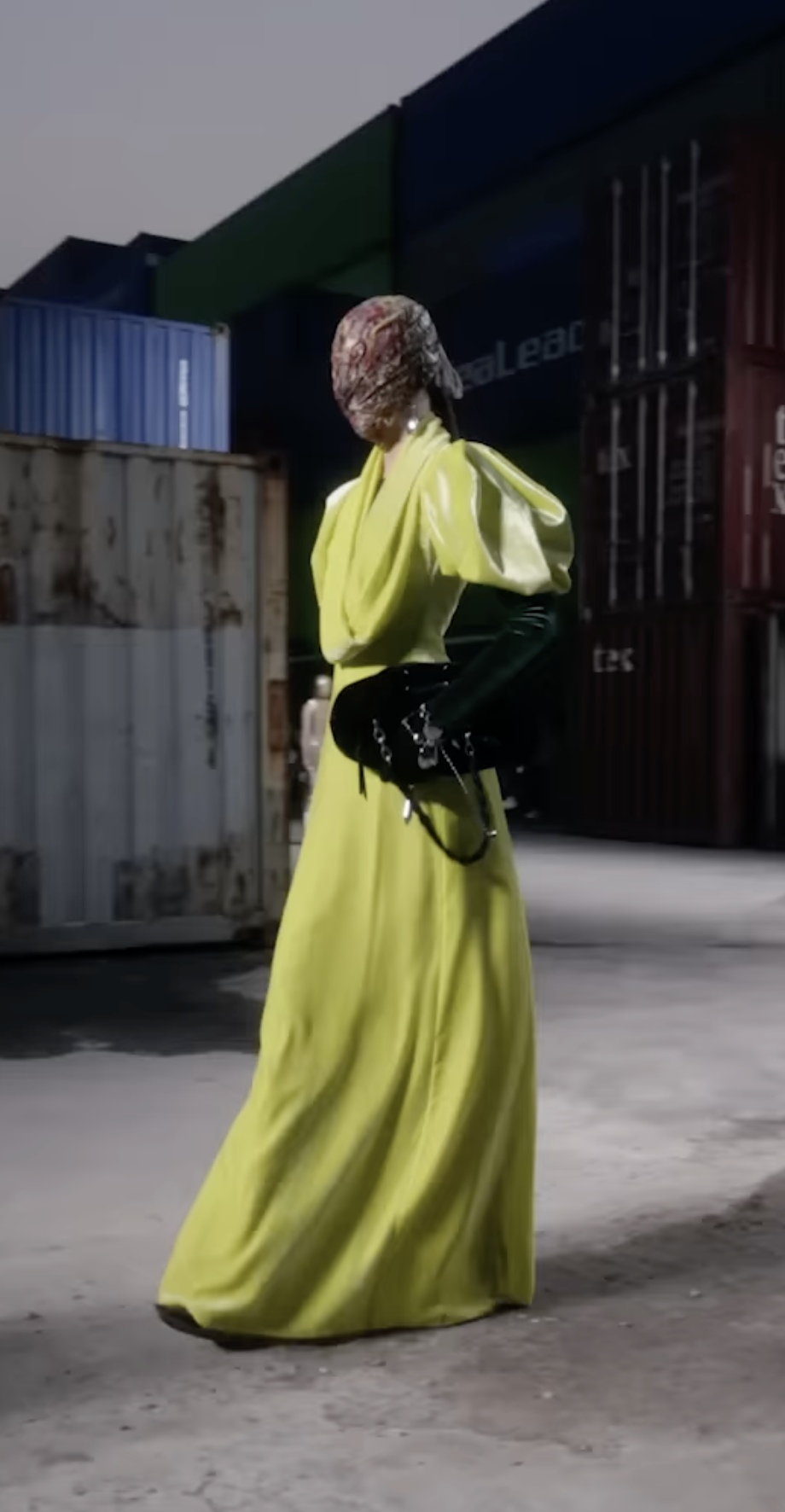
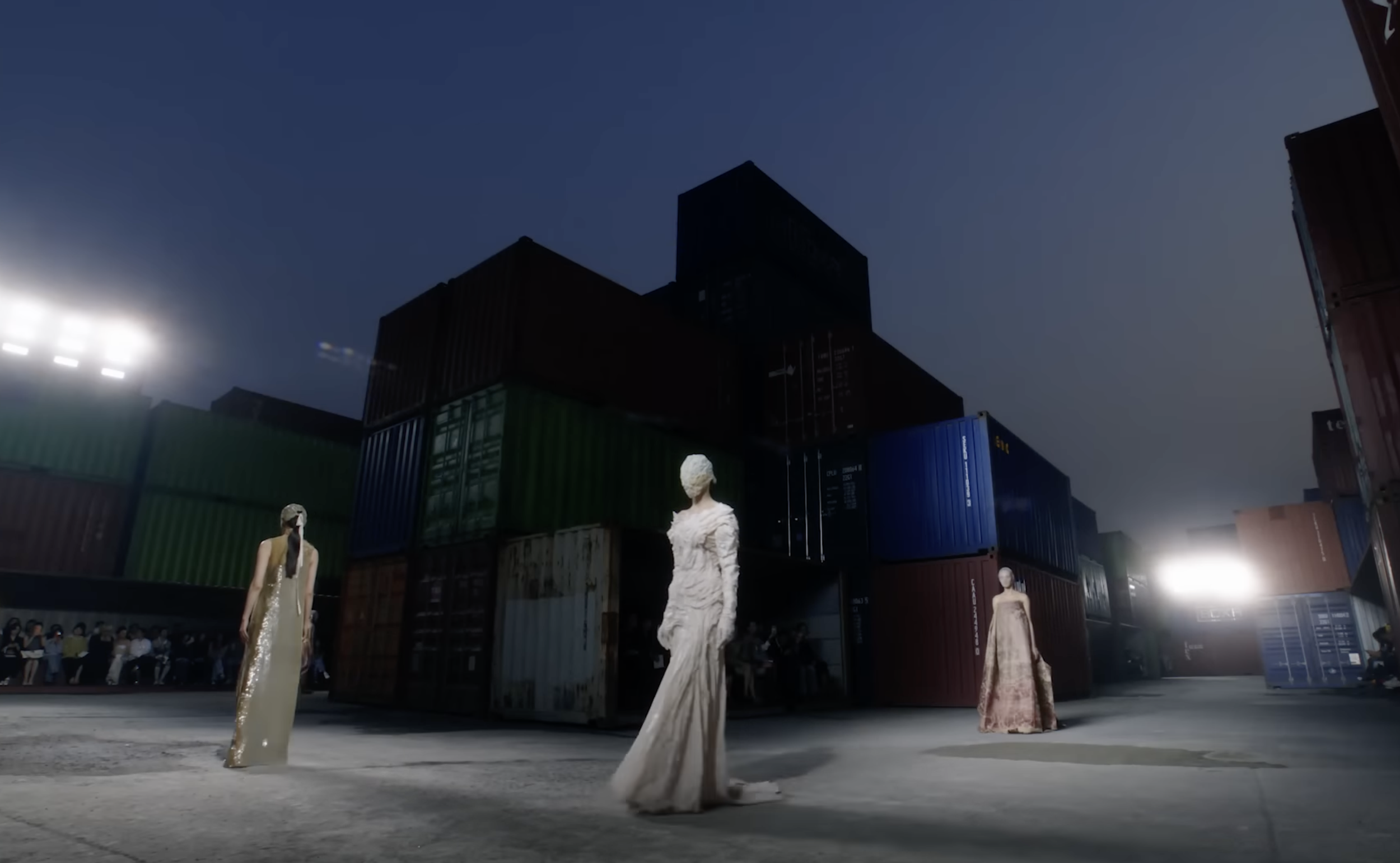
Presented in a shipping-container yard in Shanghai, the setting was impossible to read as neutral. Shipping containers stand for movement: export and import, objects crossing borders, goods travelling through the world and accumulating histories. Against this industrial architecture, Margiela presented garments that seemed to carry the opposite energy of frictionless global consumption. The collection felt full of things that had already existed, been touched, damaged, inherited, transported and reassembled.
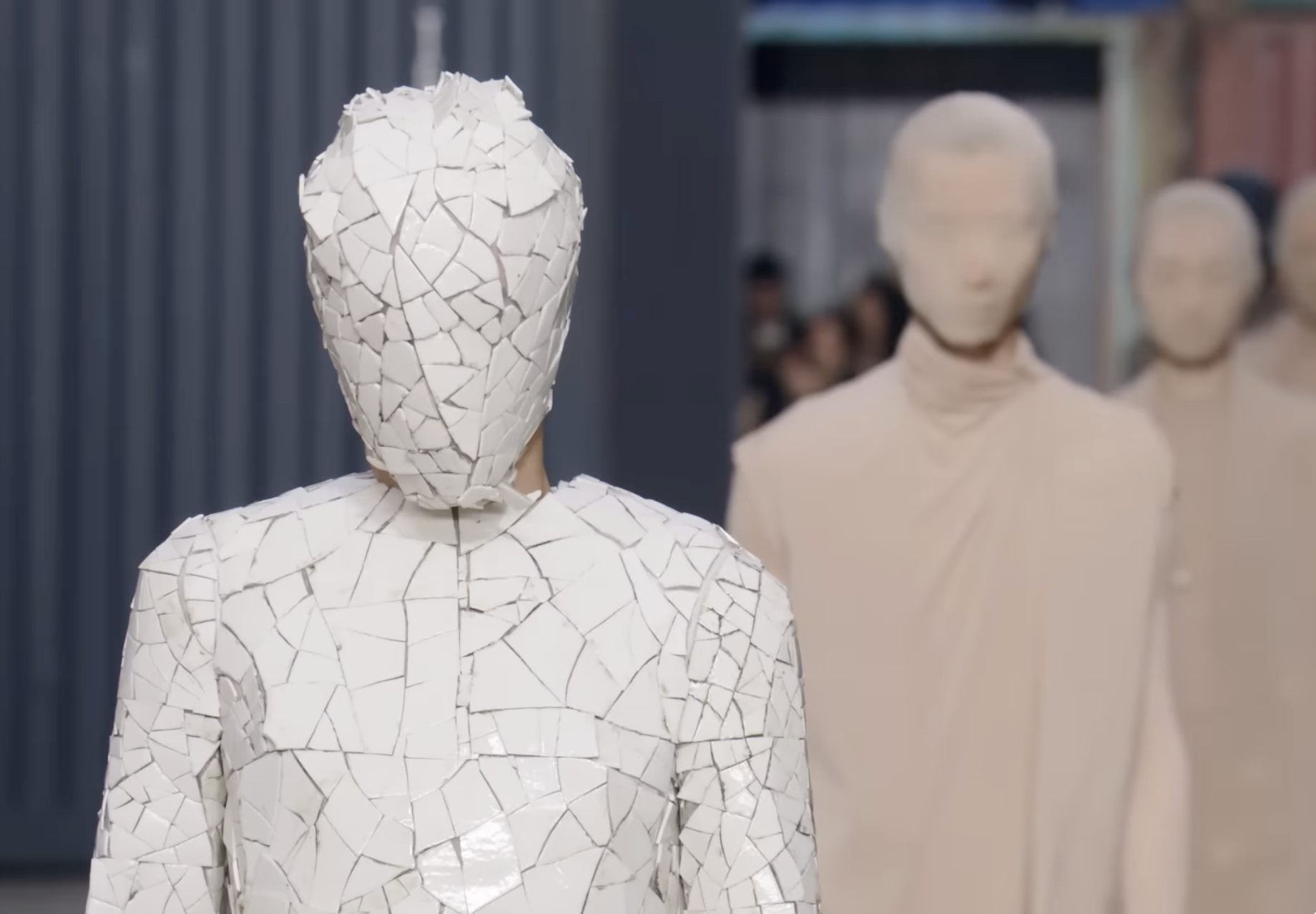
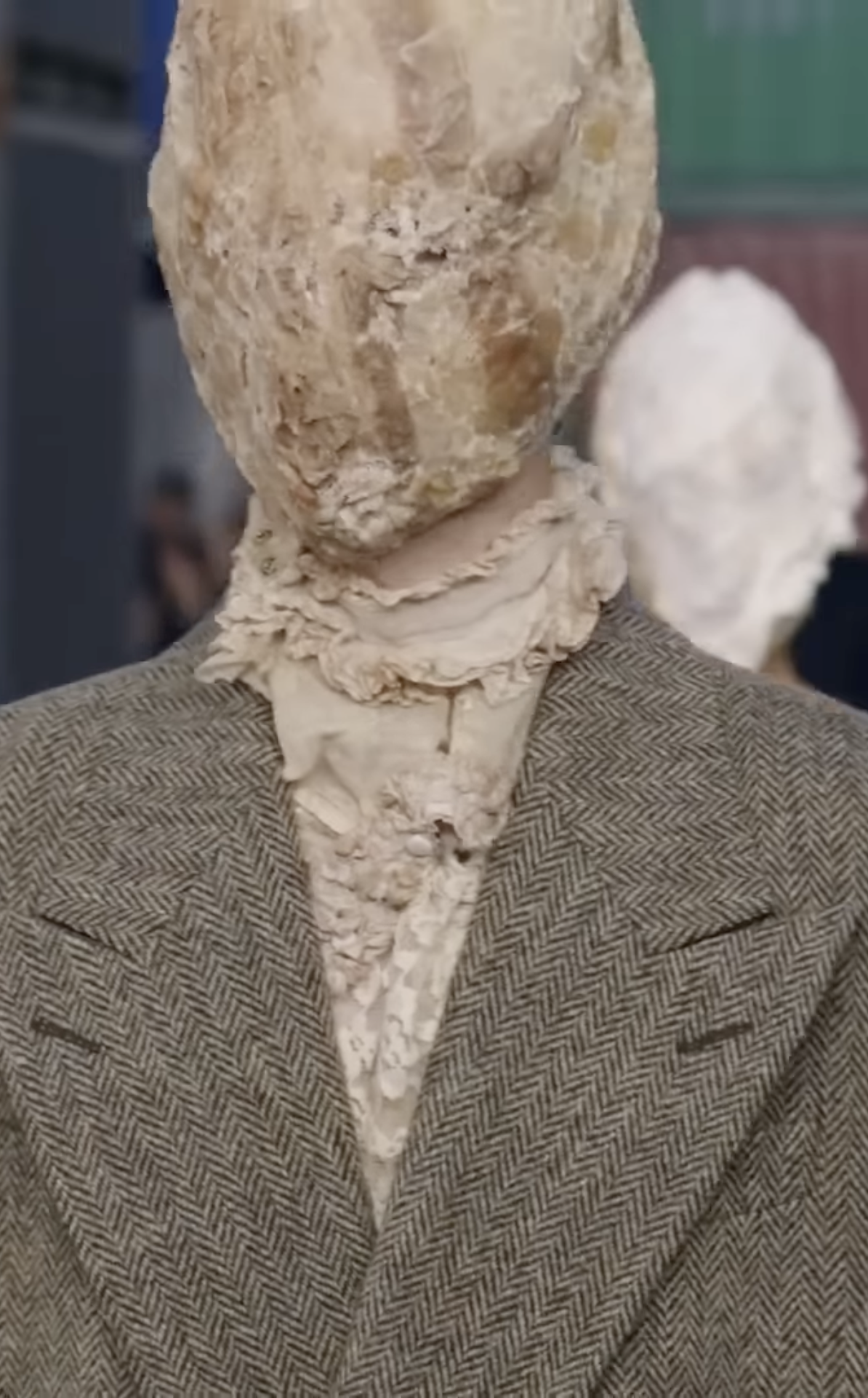
Martens has spoken about his interest in clothes, craftsmanship and garments themselves rather than focusing entirely on the personality of the wearer, and that idea became particularly powerful through the masks.
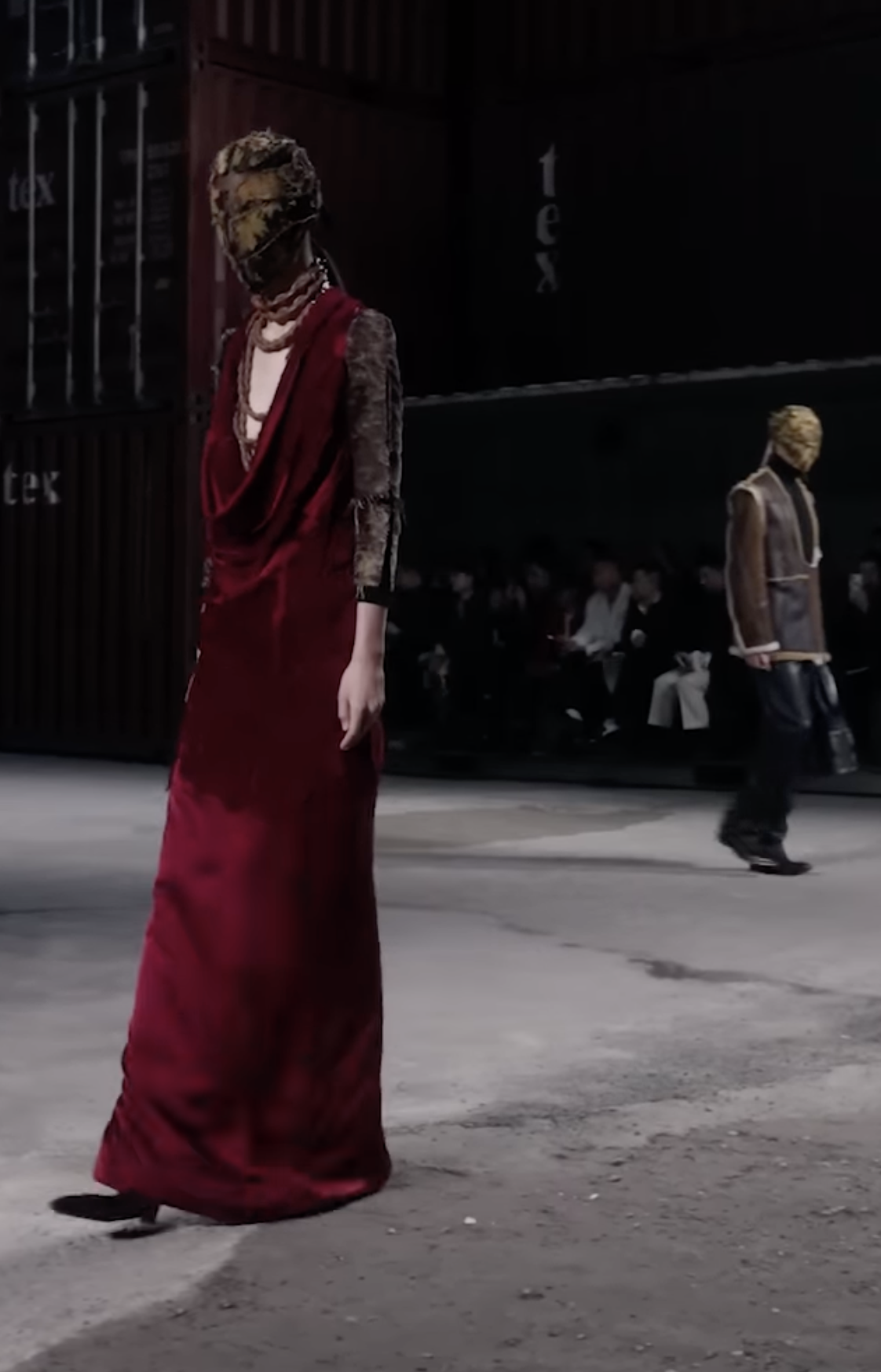
To me, their most poetic quality is not simply that they hide the face. At moments, the models seem almost to be looking inward, onto the reverse side of their own masks — onto the back of what they are wearing. Identity is turned inside out. The face, normally the place from which we read another human being, becomes another surface, another textile, another object.
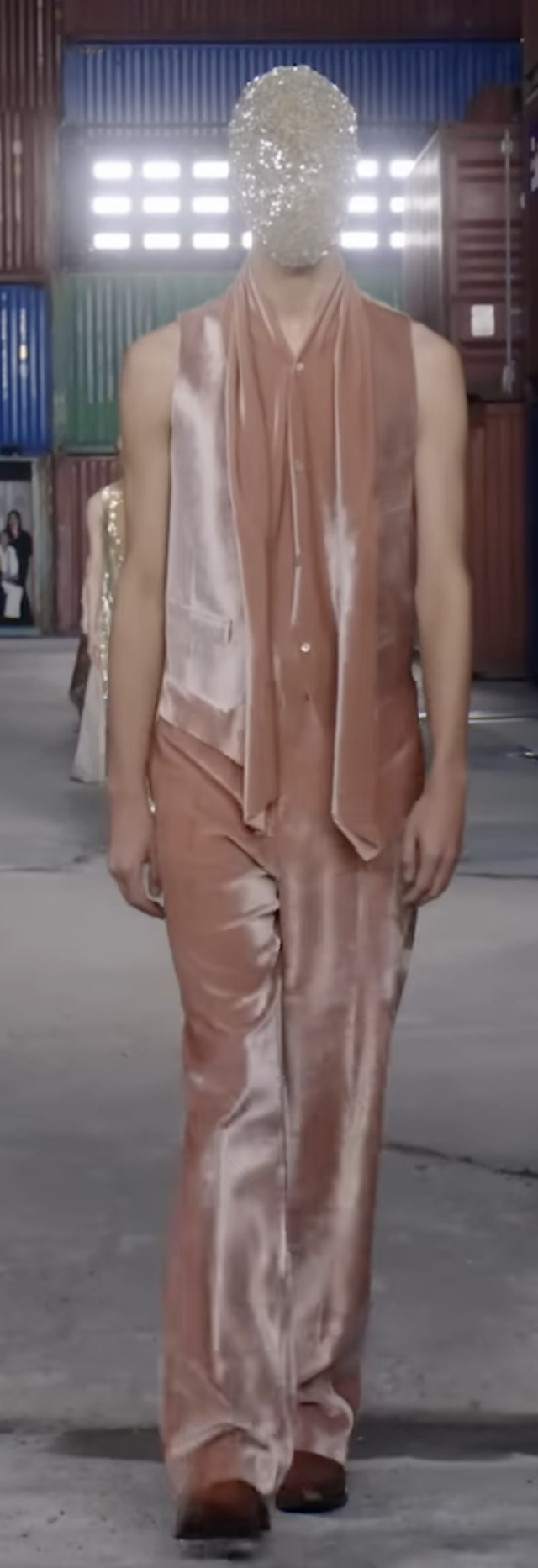
And what was equally striking was what was absent. We saw no Tabis. One of Margiela’s most instantly recognisable symbols simply disappeared. And for almost the entire collection, we saw no faces either. Both the house code and the human identity beneath the clothes were deliberately withheld.
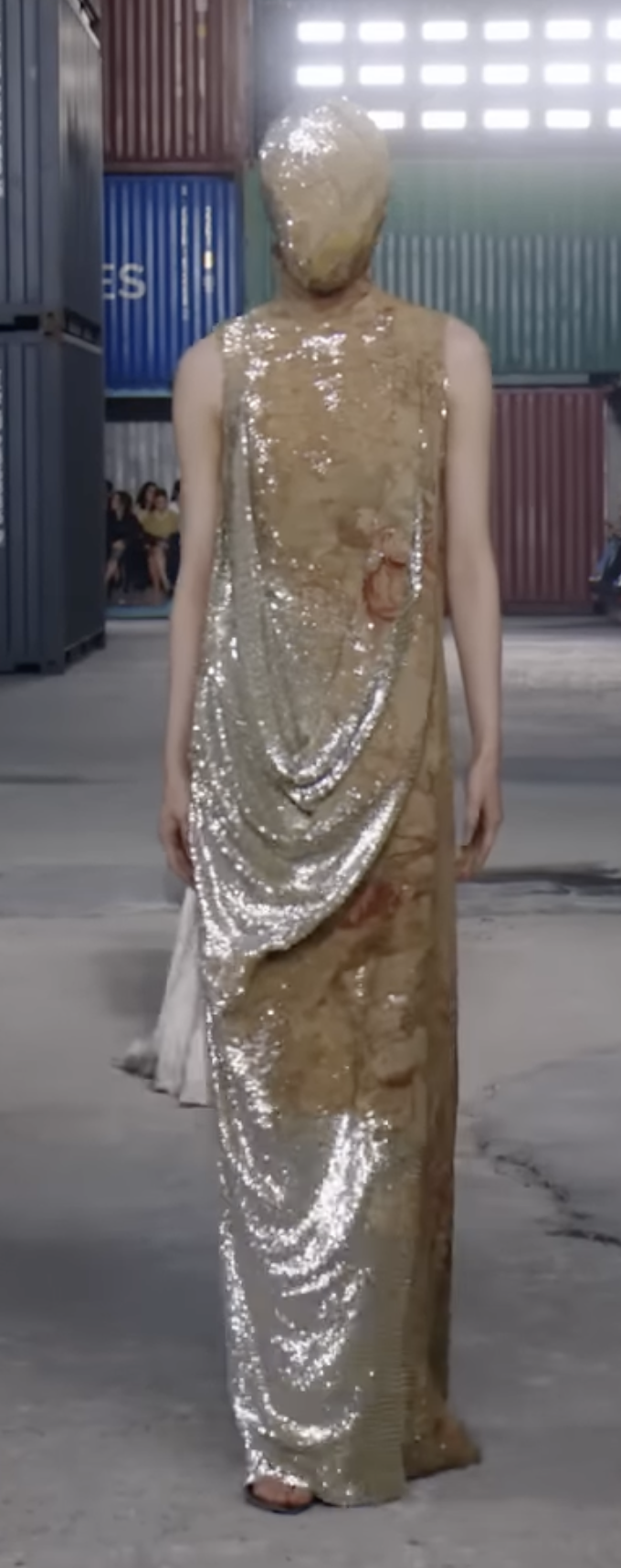
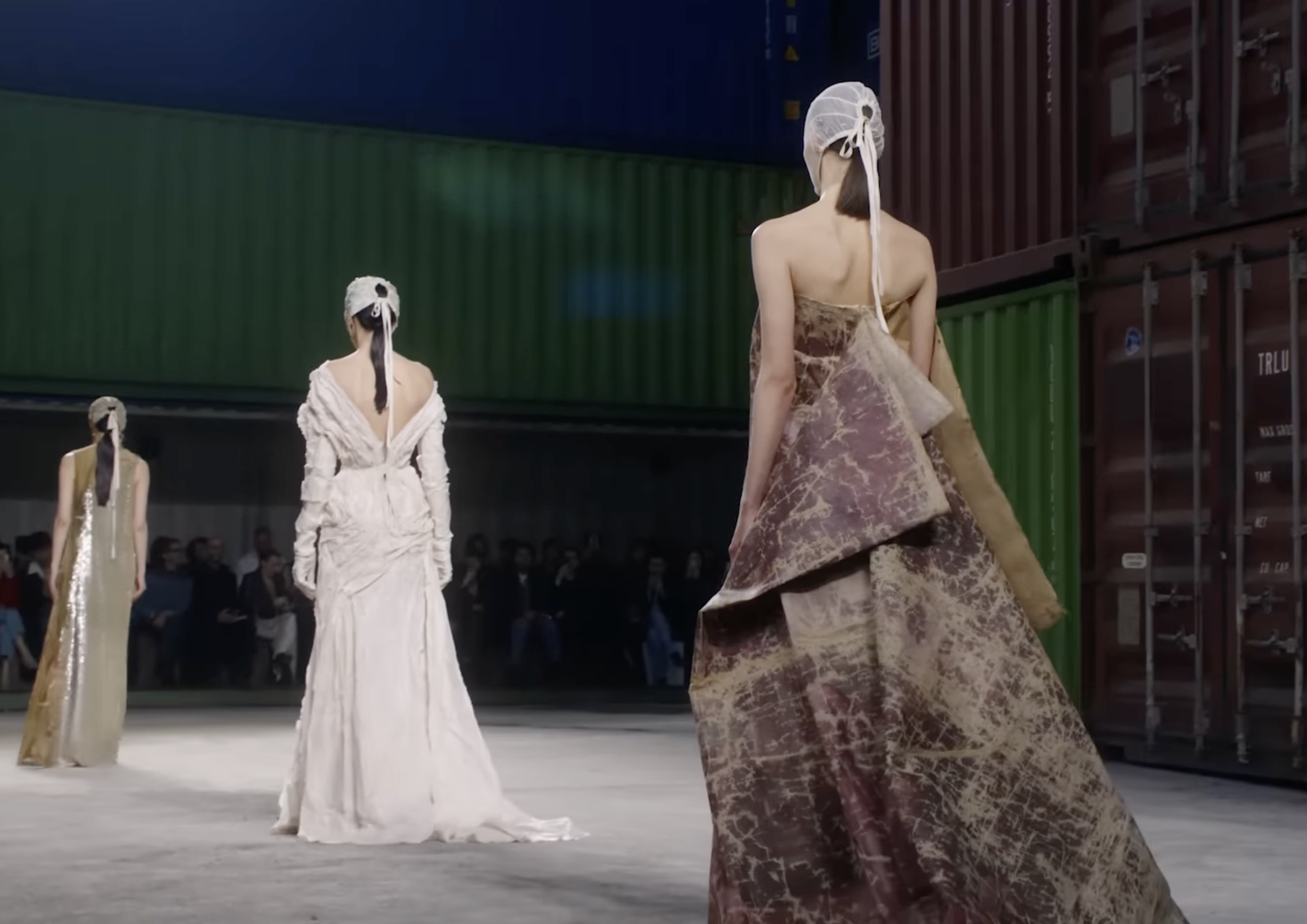
From an art perspective, much of the collection felt closer to sculpture than conventional dress. Hard and soft materials constantly negotiated with each other: marble-like or mosaic-like surfaces, wire, distressed textiles and rigid tailoring against silk, wool, lace, velvet, glitter and pleating. Some silhouettes seemed almost excavated rather than sewn. Others moved with extraordinary softness.
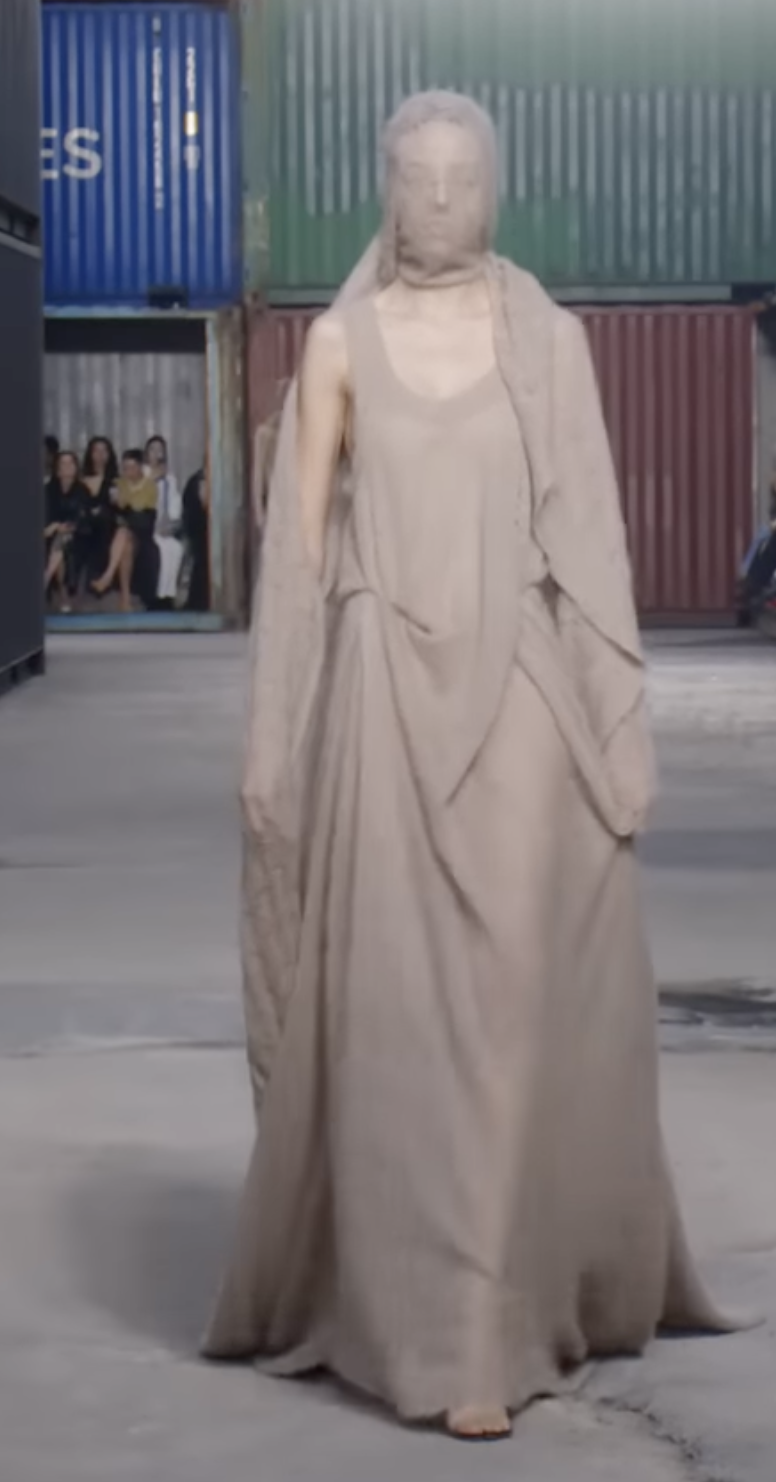
I was especially drawn to the long, enveloping wool dresses and the way fabric continued around the head as scarf, veil, cape or curtain. With only the slightest adjustment, some of these could become surprisingly wearable — almost like a hood or a protective cape. There was something deeply beautiful about that gesture. To me, they suggested the most contemporary version of a Madonna: not religious costume reproduced literally, but protection, gravity, tenderness and devotion translated into a modern body.
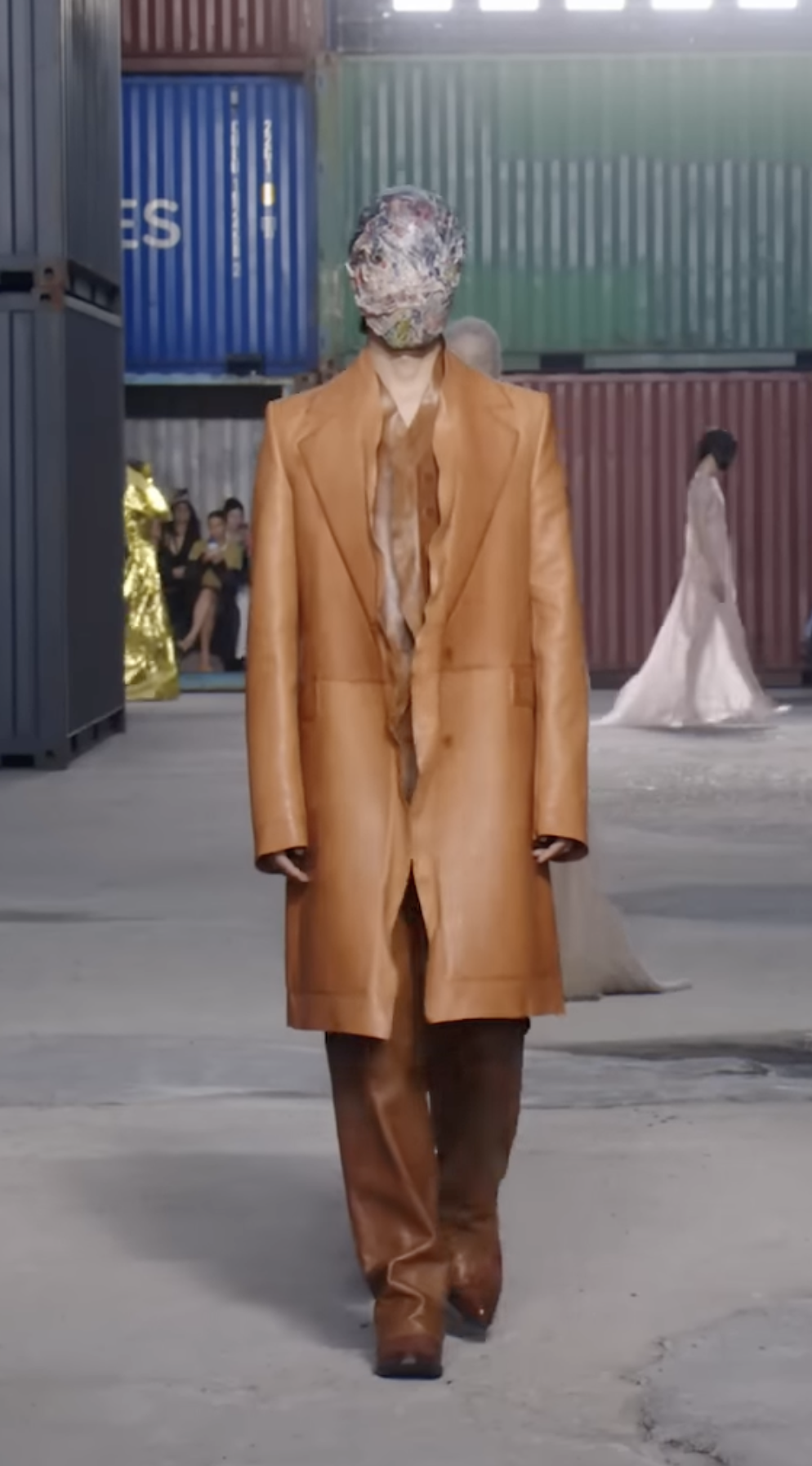
There is also a beautiful tension between silhouettes that flow and silhouettes that resist. The draped dresses seem carried by movement, while the coats and leather pieces have a stubbornness, a static architectural quality. Together they create an equilibrium that feels profoundly human: the feeling of moving through history, time and space while simultaneously carrying their weight.
The covered bodies and atmosphere of preservation reminded me of Alessandro Michele’s debut collection for Valentino for Spring/Summer 2025, shown in 2024, where furniture, lamps and interiors appeared covered beneath cloth. There was the same sensation of something being protected, hidden, archived or suspended in memory. With Margiela, however, that act of covering moves onto the human body itself.
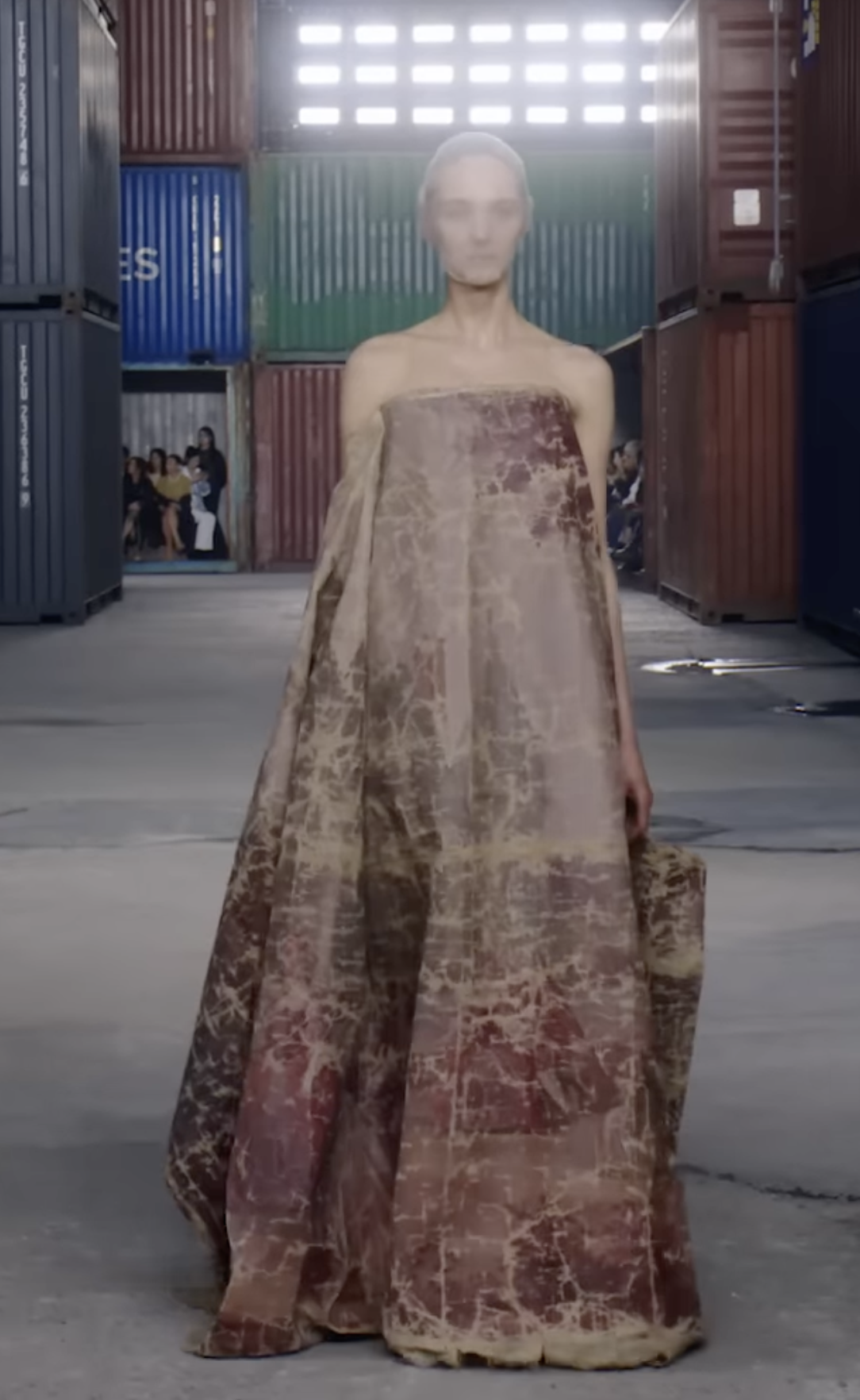
And then there is the flesh. One of the masks, marbled in reds and browns like muscle or exposed tissue, immediately gave me Francis Bacon associations. Flesh is both luxury and mortality. Historically, meat can stand for abundance, wealth and excess, but flesh is also simply what we are. It is the substance underneath clothes, status, civilisation and image. The most basic material of living things.
This is why I am happy that the collection still carries something so fundamentally Margiela: the desire to go deeper into the question of what we wear and perhaps even into the history of why we wear it. These clothes are not merely meant to be beautiful. They are meant to disturb, transform and make us reconsider the relationship between material, identity and memory.
This is also what I have always seen in Martin Margiela himself. For me, Margiela is the Tarkovsky of fashion. He understands grace in every sense of the word — not as prettiness, but as weight, silence, transformation, restraint, spirituality and time. His work has always seemed to ask what a garment is, what it remembers, and what happens when it is taken apart, reconstructed, aged, displaced or worn differently.
Glenn Martens seems to understand that this depth is one of the most important things to preserve. He does not simply quote Margiela’s visual language; he continues its questioning. What are we actually wearing? Where did these forms come from? What histories are hidden inside materials, silhouettes and rituals of dress?
And then came the final dress.
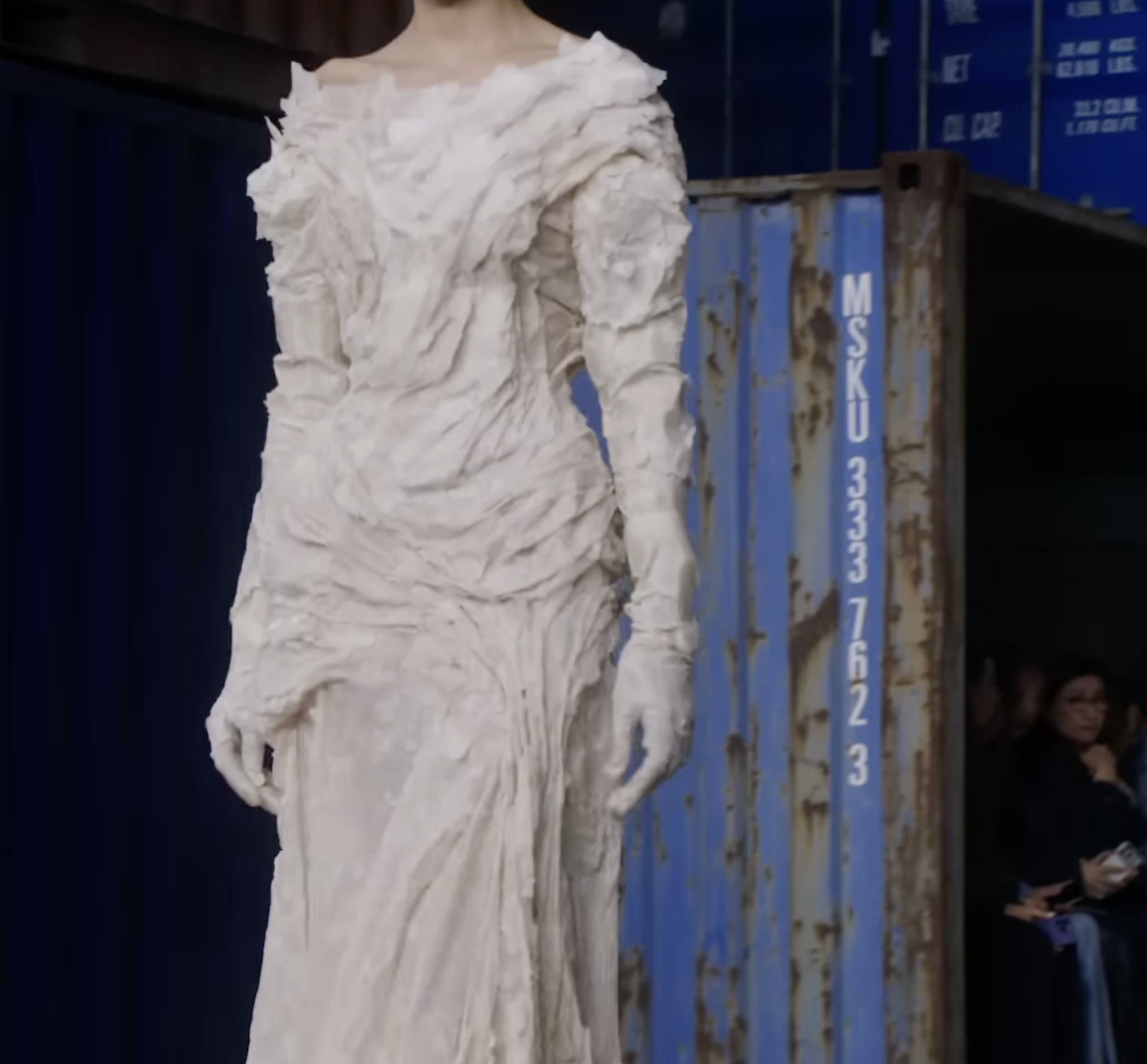
Following the white look that almost suggested a wedding dress, it made me think about what exists underneath these monumental rituals with which we structure a life. A wedding, a ceremony, an event we dress for as though clothing could contain the importance of a moment.
The final gown was exquisitely pinned, layered and held together. It had firmness and almost a kind of stubbornness, yet remained incredibly elegant. It seemed to weigh heavily on the body — materially, emotionally, historically. There was something monumental about the way it sat on the shoulders.
And after an entire collection without a visible face, this was the moment in which a face finally appeared, only faintly, beneath a veil. The final face, beneath the weight of that heavy dress resting on the shoulders.
That moment changed everything for me.
After a procession of anonymous bodies, masks, objects and materials, the human being underneath was suddenly allowed to return. It felt almost ceremonial, as though Margiela first asked us to look at clothing without identity, without personality, without even the most obvious symbols of the house itself — and only at the very end allowed the person underneath to become visible again.
For me, that final dress was a genuine fashion moment. It felt heavy, effortless, sculptural and graceful all at once. Less the image of a model wearing a garment than the image of a human being emerging from beneath clothing, history and ritual.
And perhaps that is what stayed with me most from this collection, and what I have always valued in Margiela: clothes are never only clothes. They can conceal us, protect us, transform us, question us and preserve what came before.
Clothes appeared not as disposable goods, but as objects travelling through bodies, generations, cultures and time.

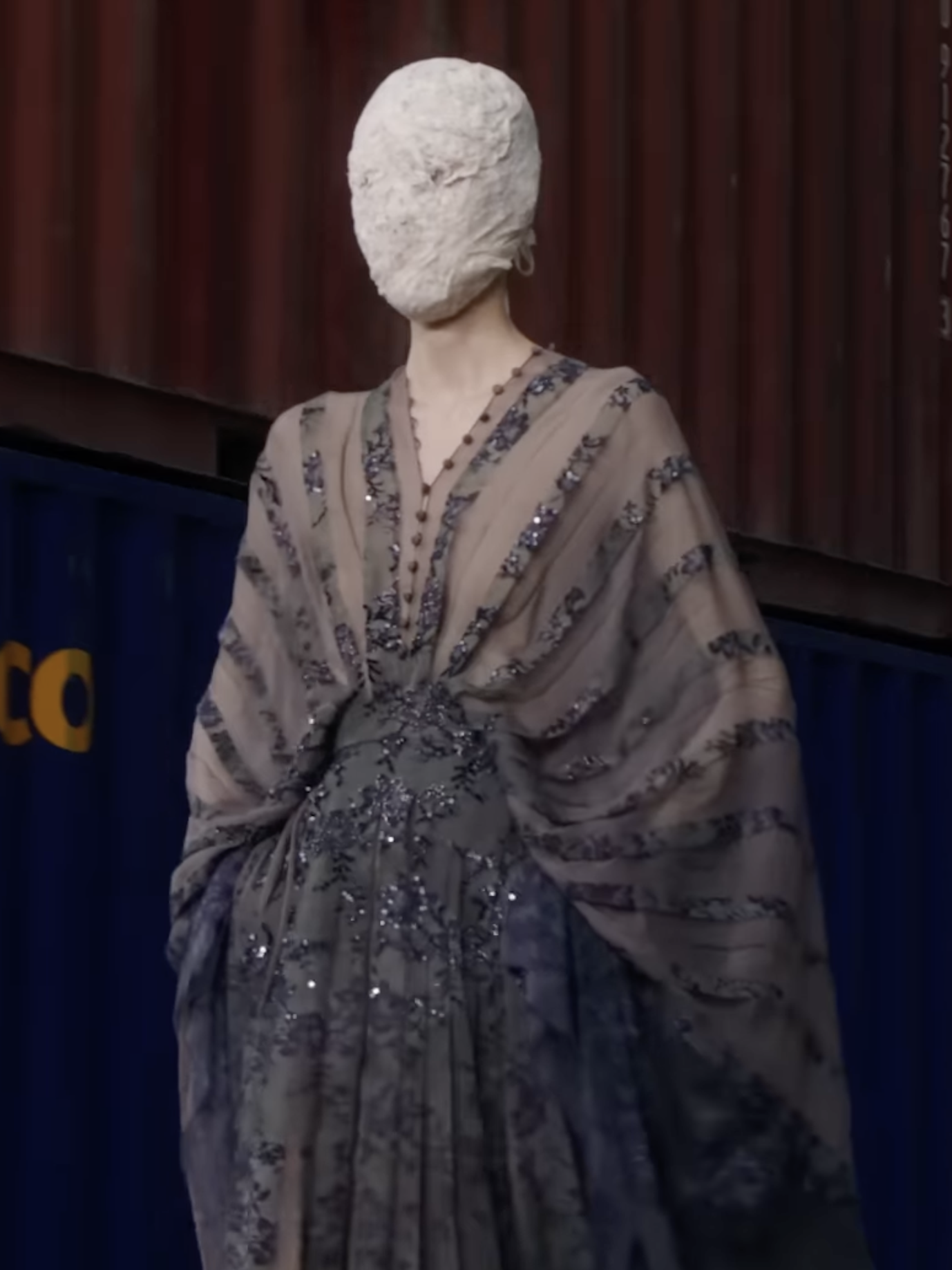
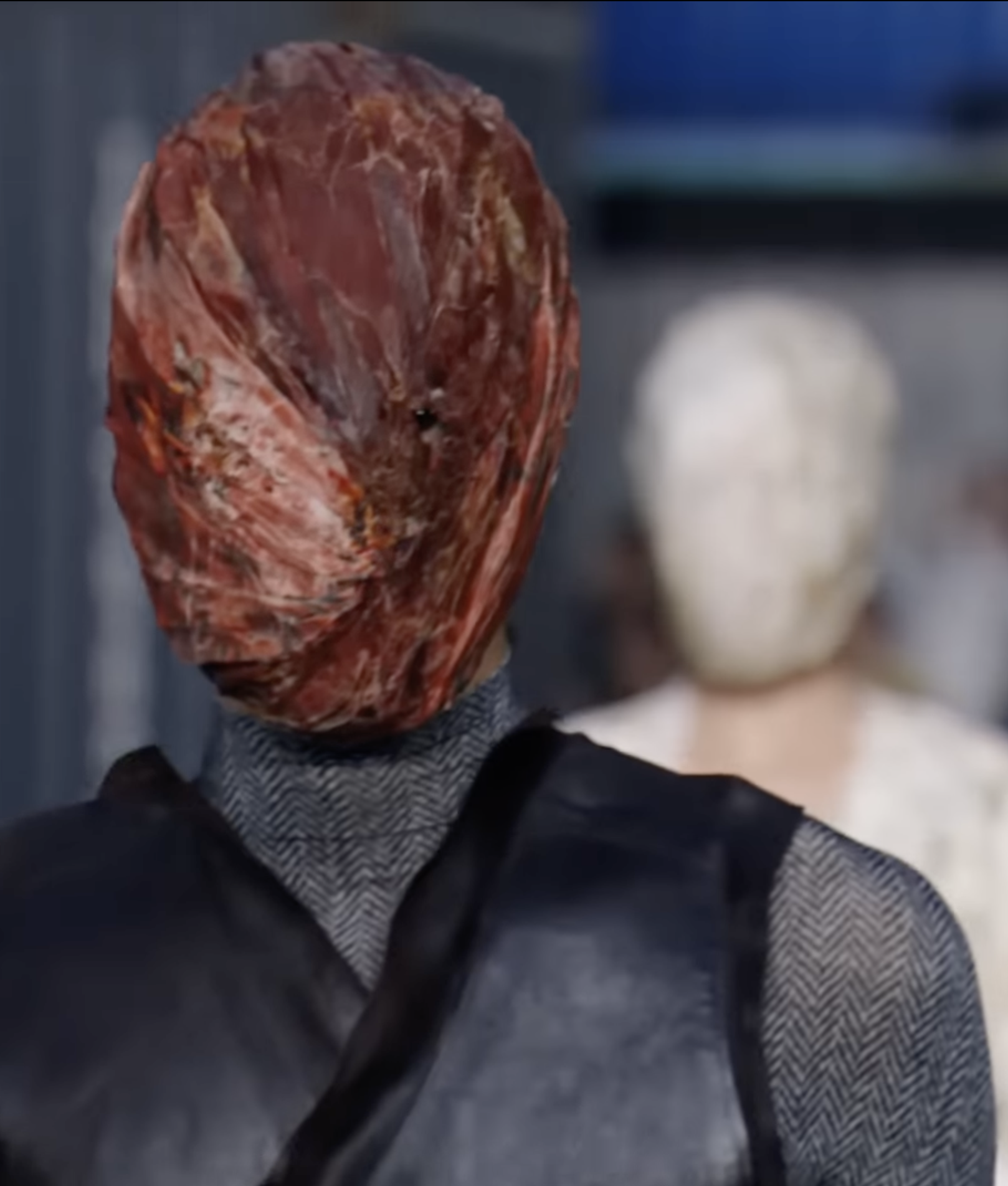
gives me Francis Bacon
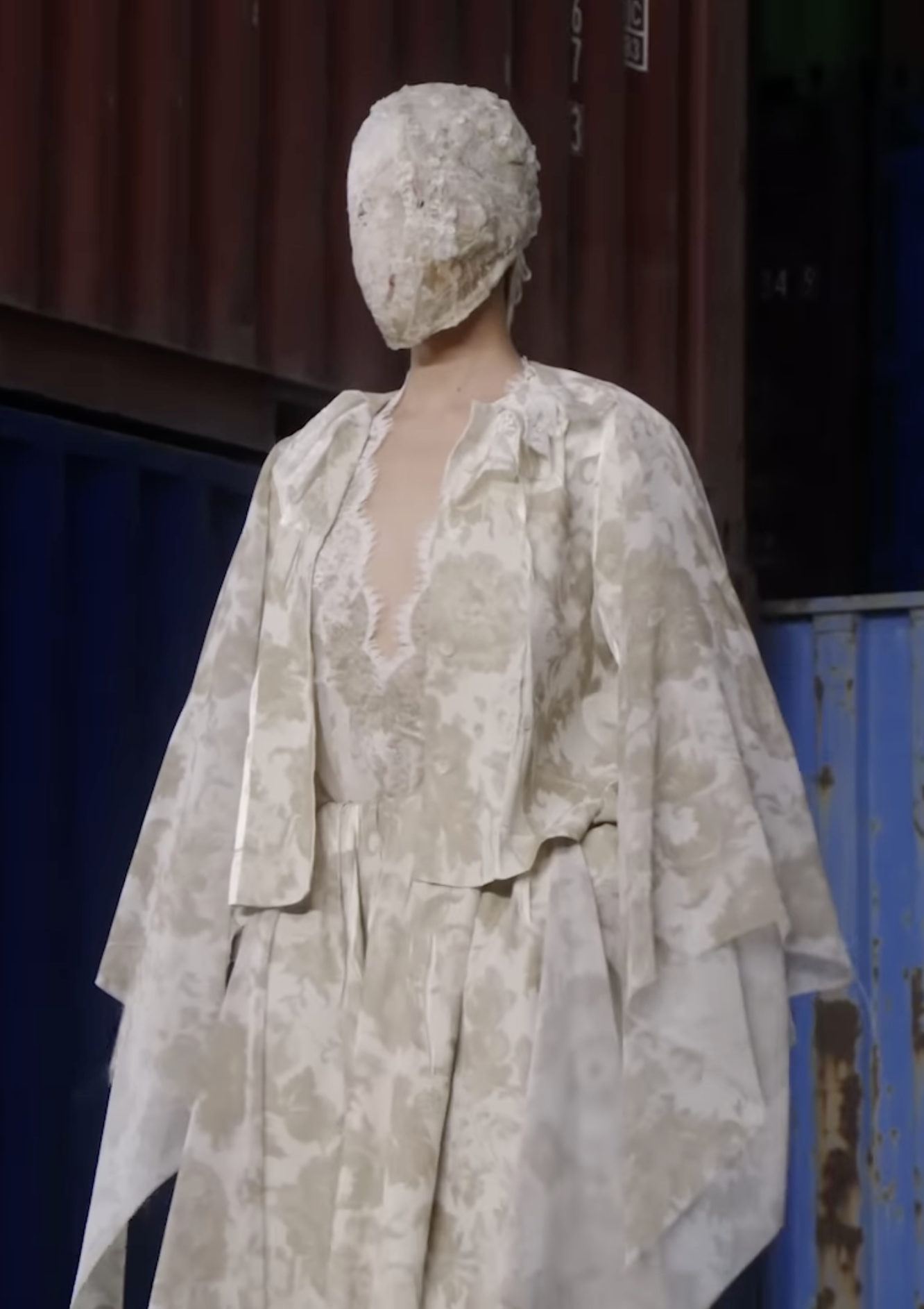
eternal dress 365/365d for 24/24h
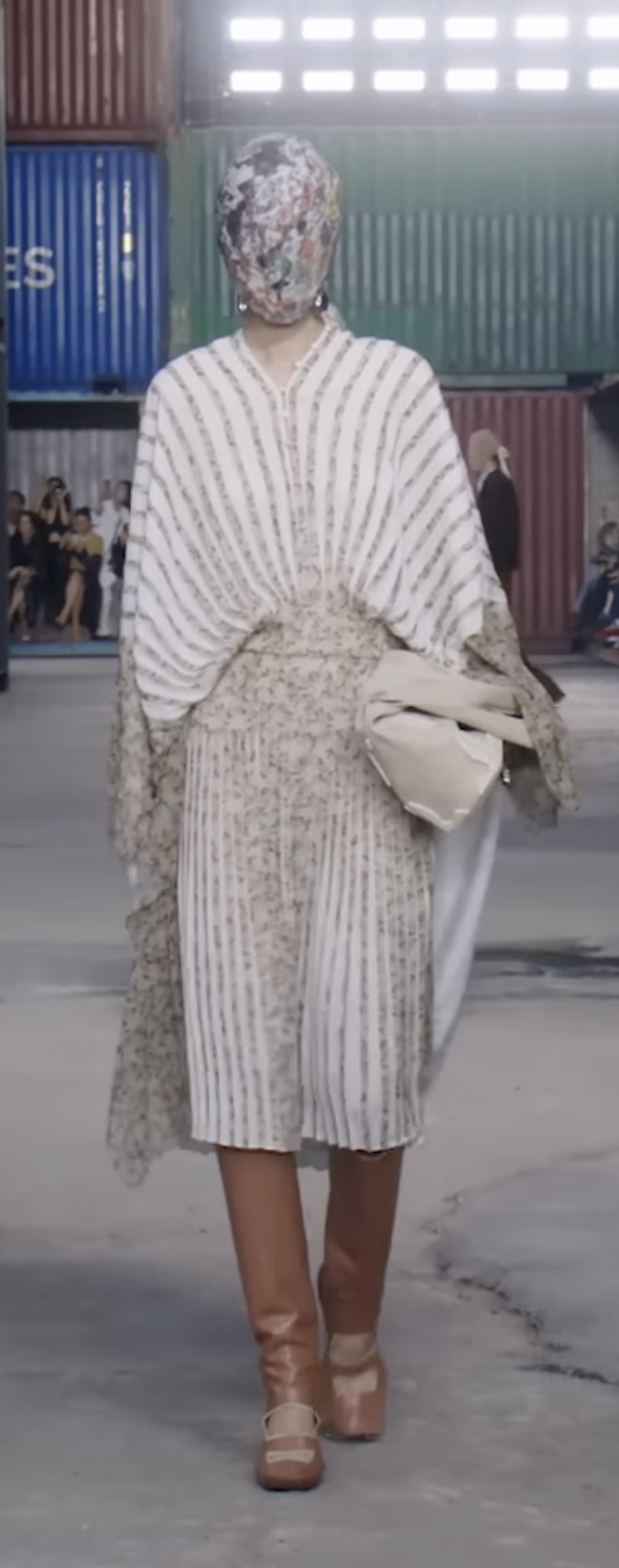
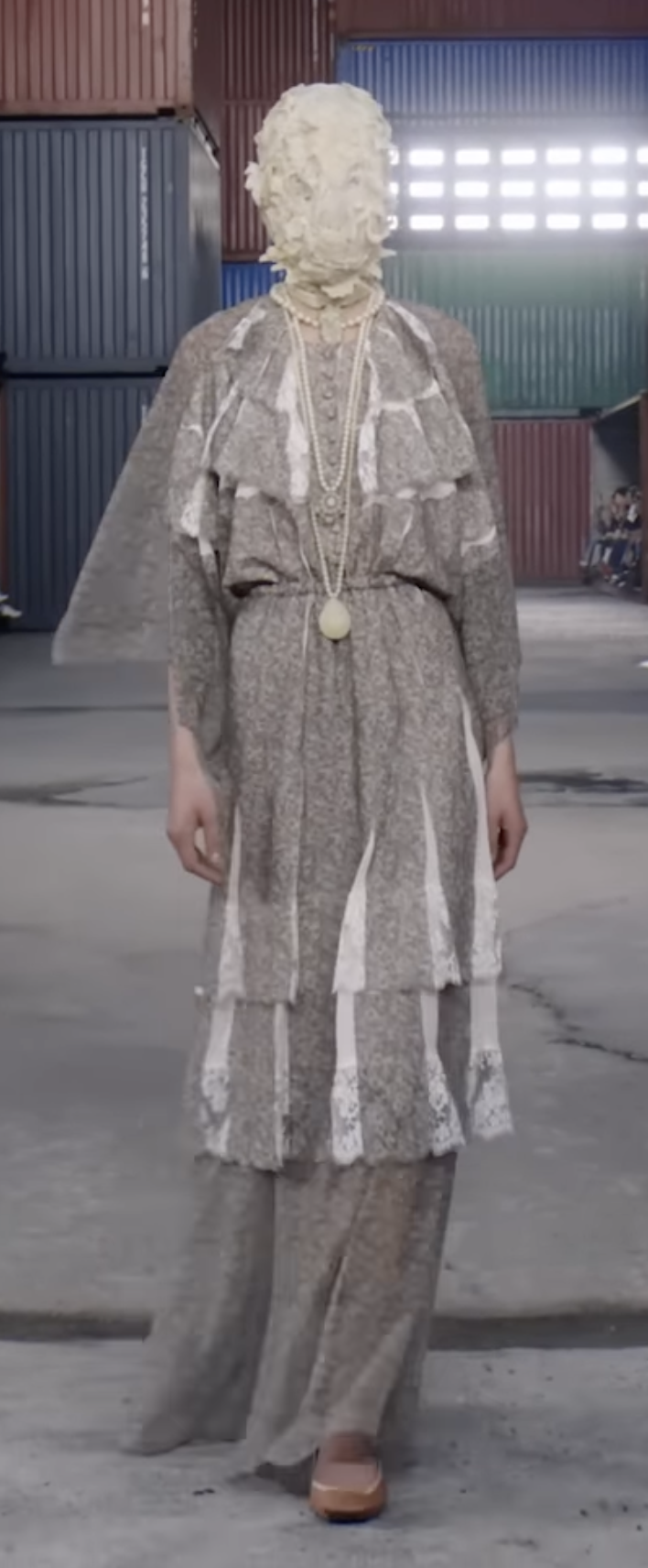
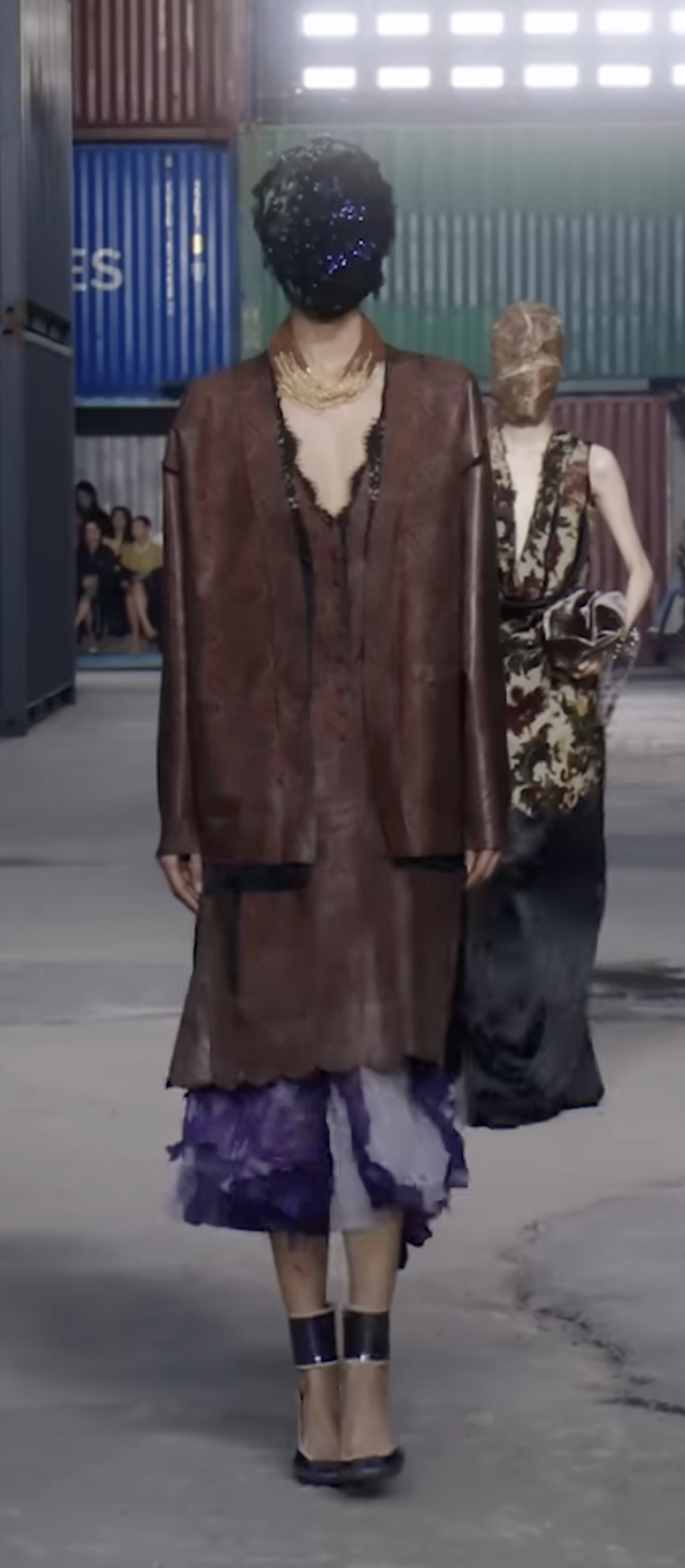
purple / English red!
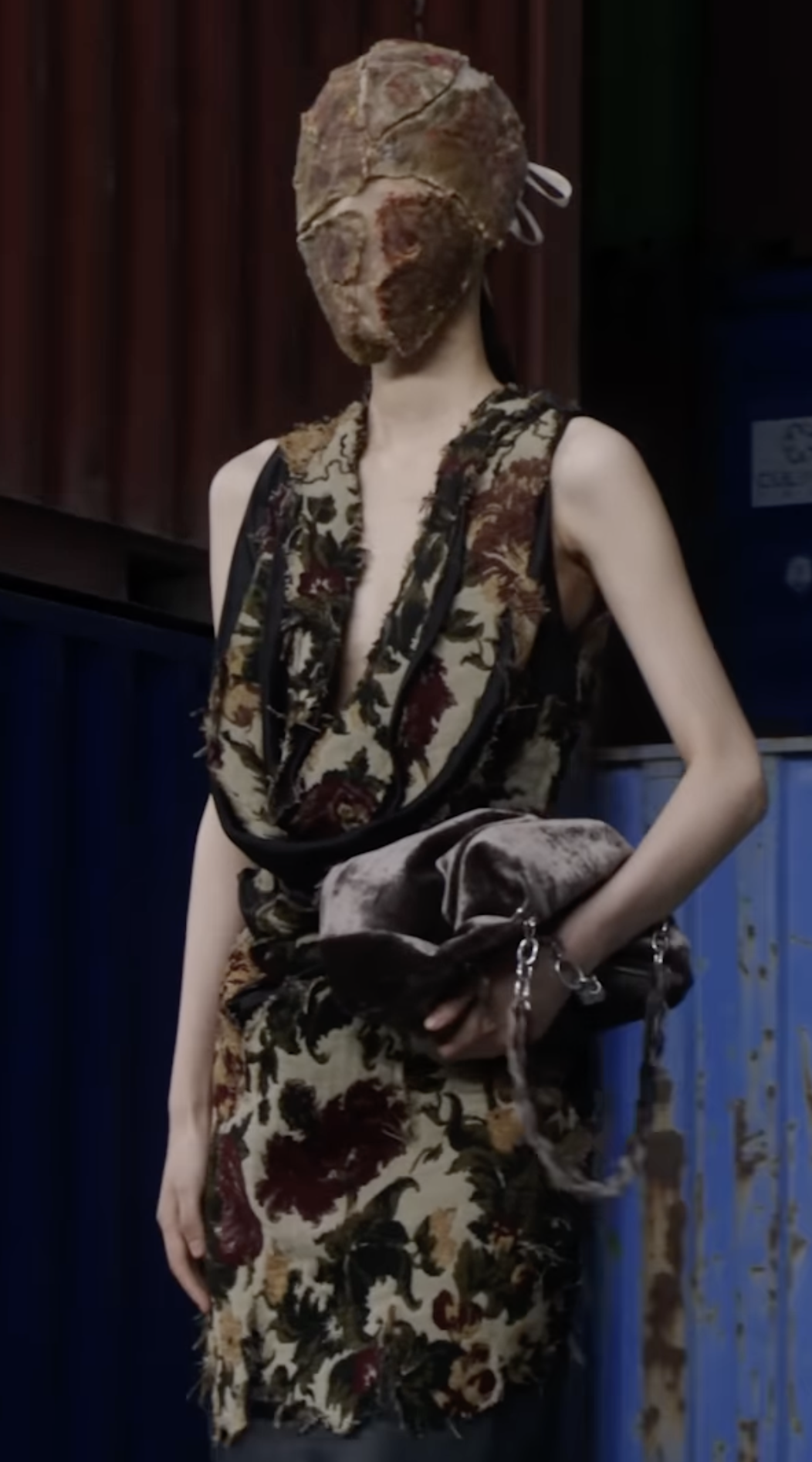
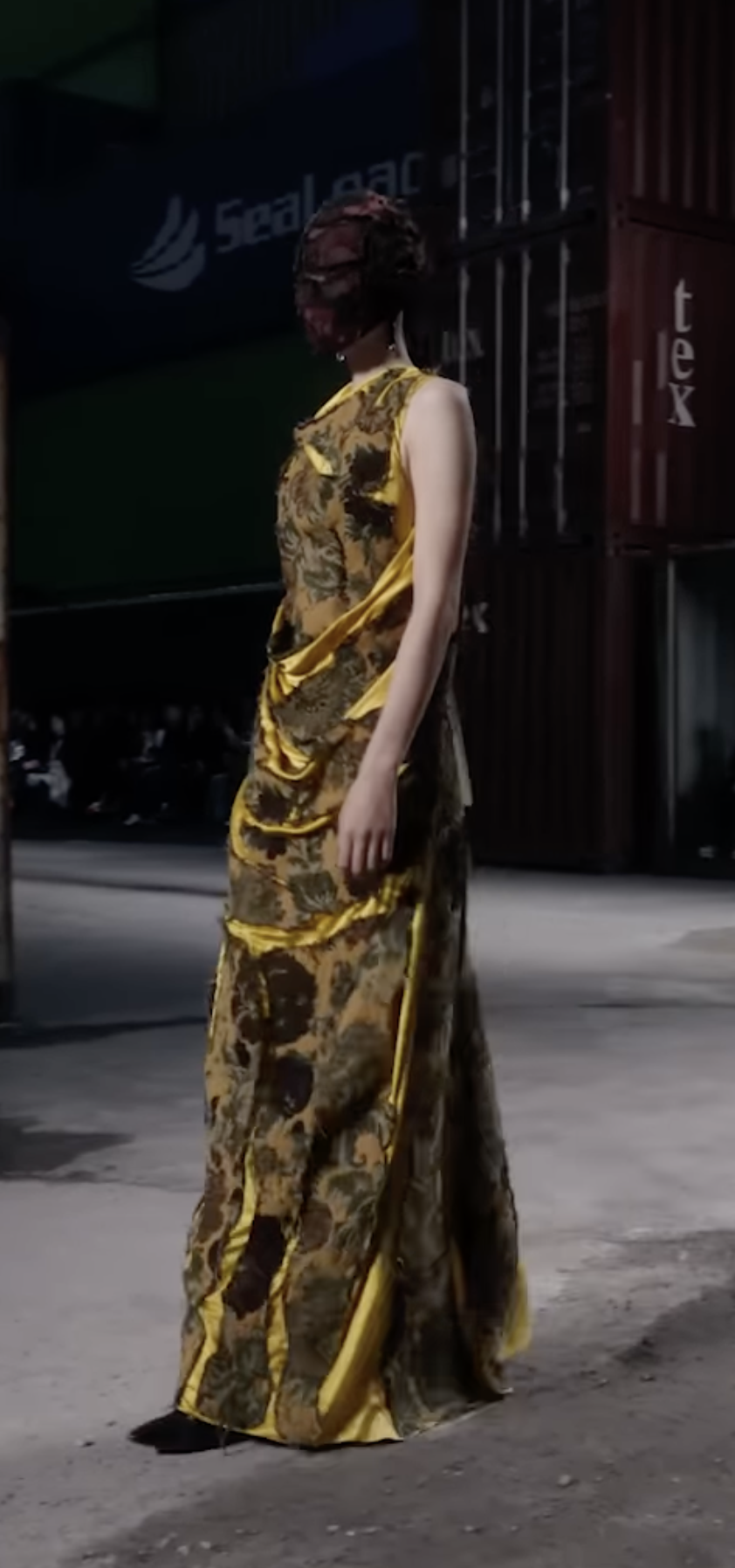
preserving the moment of cutting into a life (as a dress)
Fall / Winter 2026/27
Maison Margiela - Paris
Glenn Martens